
Axl Imperial is an international manufacturer and supplier of automation, measurement control and testing devices for advanced industrial and laboratory use.
Utilising the design of state-of-the-art equipment and know-how in the field of automation and high-precision industrial measurement and control, Axl Imperial offers production processes and automation solutions to the most demanding needs of modern industry.
Consisting of a variety of engineers, each with great experience in specific industrial segments as automation, motion, measurement and control, the company provides integrated services, from design, development and installation of industrial equipment, to technical consulting, service and after-sales support, for all industrial needs as high precision in-line and laboratory measurements and quality control.
Axl Imperial seeks to constantly improve the quality of the services and systems provided, with the sole criterion, the principle, that quality and economy in production are the key prerequisites for a healthy industrial development and high quality products.
Industrial Worker
Shortage &
Humanoids
Industrial Worker Shortage: Can Humanoids Be a Viable Solution for Factories in 2026?
Not long ago, the primary concern for most plant managers was production speed. How to increase throughput from the same line, the same shift, the same workforce. Today, however, a different question is keeping operations directors up at night: where is the workforce going to come from? Across Europe and beyond, manufacturing facilities are facing a growing shortage of industrial workers.
A New Type of Problem
Skilled operators are aging and leaving the industry faster than new ones are being trained. Younger generations are showing less appetite for physically demanding, repetitive, or hazardous factory roles. Seasonal peaks can no longer be reliably staffed. And the traditional solution of hiring more people is becoming harder, slower, and more expensive to execute with every passing year.
For production facilities that rely on human hands for packaging, palletizing, machine tending, material handling and quality inspection, this is not a temporary disruption. It has quickly become a fundamental reality that demands a structural response. So, the question is no longer whether to automate. But how fast and far automation can realistically go.
The Idea Behind the Industrial Humanoid
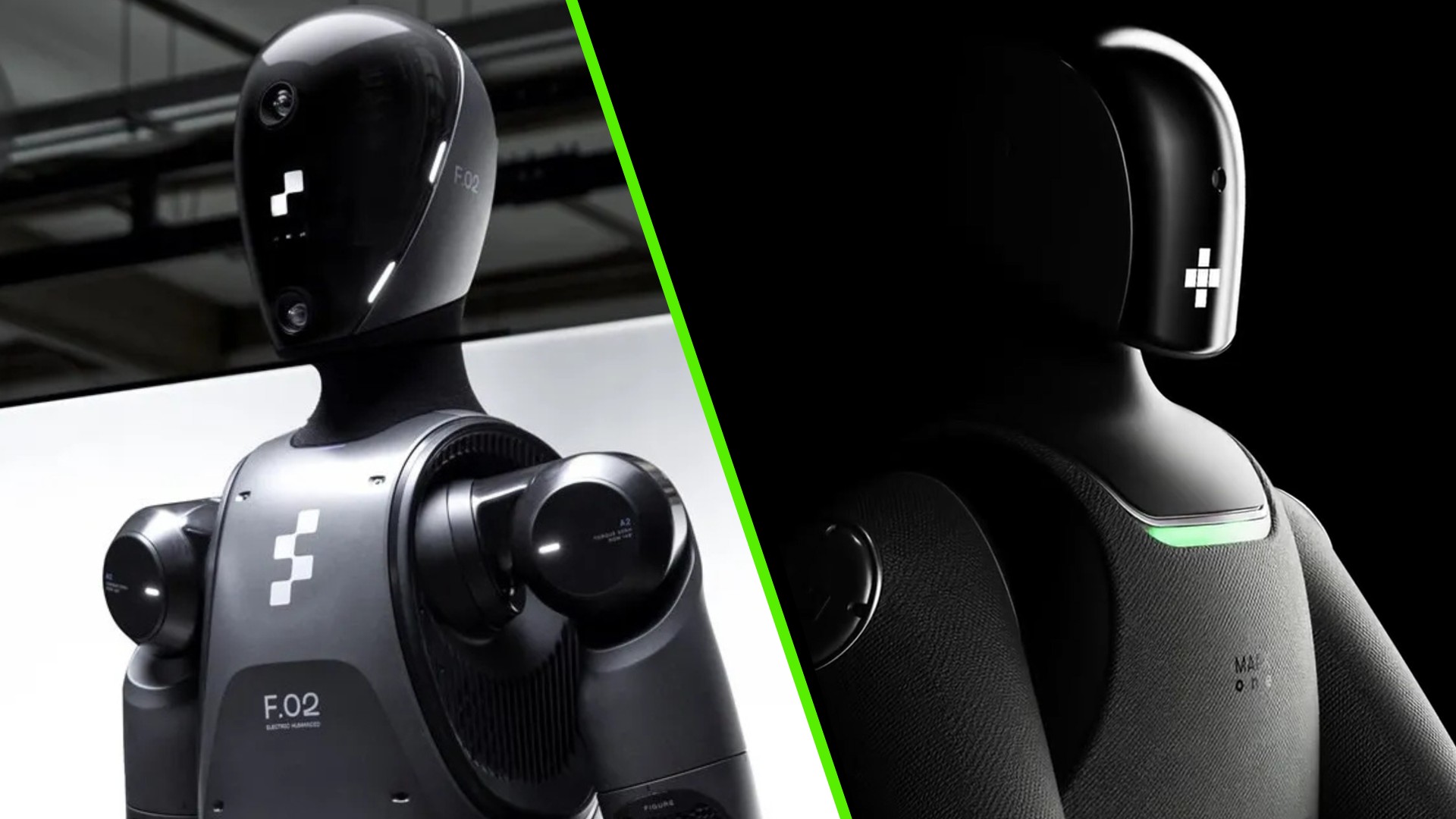
For years, the idea of a humanoid robot working alongside factory employees existed mainly in concept videos and investor decks. In 2026 though, it has become a tangible and commercially available reality. Large technology corporations and specialized robotics firms have brought humanoid platforms to market, each with a different design philosophy, capability set, and target deployment scenario. For manufacturers facing workforce shortages on repetitive or physically demanding tasks, the concept is understandably appealing: a robot that moves like a person, works in spaces designed for people, and can be redeployed to different tasks without reconfiguring the entire production line.
But not all humanoids are built the same, or for the same purpose. And this distinction matters enormously when evaluating them as a practical investment for industrial operations.
Two Types of Humanoids
The humanoid landscape today can be broadly divided into two distinct categories: General Intelligence Humanoids and Purpose-Specific Industrial Humanoids. Understanding the differences between the two is the first step towards making an informed decision for your facility.
General Intelligence Humanoids
General intelligence humanoids are exciting to watch and tend to dominate the technology press. These elaborate robots are designed to operate across multiple environments and handle a wide variety of tasks in factories, but also in hospitals, retail spaces, logistics centers, the defense industry and beyond. They are built on broad AI models, capable of reasoning across different contexts, and engineered to approach the physical versatility of a human being.
The technology behind them is genuinely impressive. Advanced locomotion systems allow them to navigate uneven terrain, climb stairs, and recover from destabilizing forces. Multi-modal AI enables object recognition, contextual decision-making, and adaptive task execution. Some platforms can even be instructed through natural language, reducing the technical barrier for end-users.
However, the substantial capital investment required could limit their industrial deployment in the short to medium term. Purchase costs are high, and the computer infrastructure required to run advanced general AI in real time adds further to the total cost of ownership. Programming and adapting these platforms to specific industrial tasks demands specialized expertise that most manufacturing operations do not have in-house. Hence, development cycles are long, integration into existing production environments is complex, and measurable ROI on a factory floor (namely efficiency, uptime, and predictability) is difficult to quantify and slower to materialize.
The Purpose-Specific Industrial Humanoids
On the other hand, purpose-specific industrial humanoids take a fundamentally different approach. Rather than providing a robotic platform capable of doing everything, they concentrate their intelligence and mechanical design on a clearly defined set of industrial tasks. The goal is to provide a reliable alternative for repetitive, physically demanding, or precision-sensitive applications. The very applications where human labor is hardest to sustain and most costly to replace.
These platforms are not trying to run, jump, or hold a philosophical conversation. What they are designed to do is navigate autonomously across a production floor, pick up components, carry loads, tend machines, perform packing and placing operations, and execute lightweight industrial tasks with the kind of consistent precision that human workers cannot maintain, especially throughout long shifts.
The practical advantages of this focused design philosophy are significant. As humanoids are engineered around factory constraints, deployment timelines are dramatically shorter and the integration into existing production environments is more straightforward. The AI and sensing systems are optimized for specific industrial tasks (i.e. object detection, tactile feedback, payload management, spatial navigation on production floors etc.), rather than spread across a broad range of environments and scenarios. And last, but not least: the commercial proposition is much clearer, with a direct and quantifiable ROI based on reduced labor dependency, increased uptime, and consistent output quality
Which Humanoid Type Is Right for Your Factory?
Our prediction is that both types of humanoids will eventually play a role in the future of industrial automation. But in different timescales and operational profiles.
General Intelligence Humanoids make more sense for organizations with long investment horizons, deep technical resources, and a strategic appetite for being at the frontier of automation technology. Their potential ceiling is high, but so is the cost, complexity, and time to value return
Purpose-Specific Industrial Humanoids, however, are engineered around the realities of the factory floor as it exists today. For operations dealing with worker shortages in processing industries, they offer a faster path from investment to measurable return. They may be less versatile in a broader application spectrum, but considerably more effective in actual production terms.
And to take it a step further, for the food and beverage, pharmaceuticals, metal processing, logistics and assembly industries, the Purpose-Specific Industrial Humanoid is a much more pragmatic choice.
MarkOne: Greece's Answer to the Industrial Workforce Challenge
Operating long enough in the industrial automation sector, we have realized that the increasing lack of workers would amount to a serious obstacle to profitable production. Over the last couple of years, Axl Imperial’s engineers have been working to fully design and produce "MarkOne": a purpose-built, mobile industrial humanoid platform, combining an AMR base with a built-in battery, dual 6-axis collaborative arms and five-fingered hands engineered for sensitive manipulation. It is designed to move freely across production floors, perform a broad range of lightweight industrial tasks, and operate continuously without the fatigue, turnover, or scheduling constraints that define human labor in a factory context.
"MarkOne" will be officially unveiled between the 25th and 27th of April 2026 at the Automation & Robotics exhibition in Metropolitan Exhibition Center, Athens. For those curious to see how a purpose-specific industrial humanoid could fit into their own production environment, drop by our booth for a live demonstration.
And if you are determined to solve your workforce shortage, contact us to discuss all possible solutions.
Contact Us More Articles