
Axl Imperial is an international manufacturer and supplier of automation, measurement control and testing devices for advanced industrial and laboratory use.
Utilising the design of state-of-the-art equipment and know-how in the field of automation and high-precision industrial measurement and control, Axl Imperial offers production processes and automation solutions to the most demanding needs of modern industry.
Consisting of a variety of engineers, each with great experience in specific industrial segments as automation, motion, measurement and control, the company provides integrated services, from design, development and installation of industrial equipment, to technical consulting, service and after-sales support, for all industrial needs as high precision in-line and laboratory measurements and quality control.
Axl Imperial seeks to constantly improve the quality of the services and systems provided, with the sole criterion, the principle, that quality and economy in production are the key prerequisites for a healthy industrial development and high quality products.
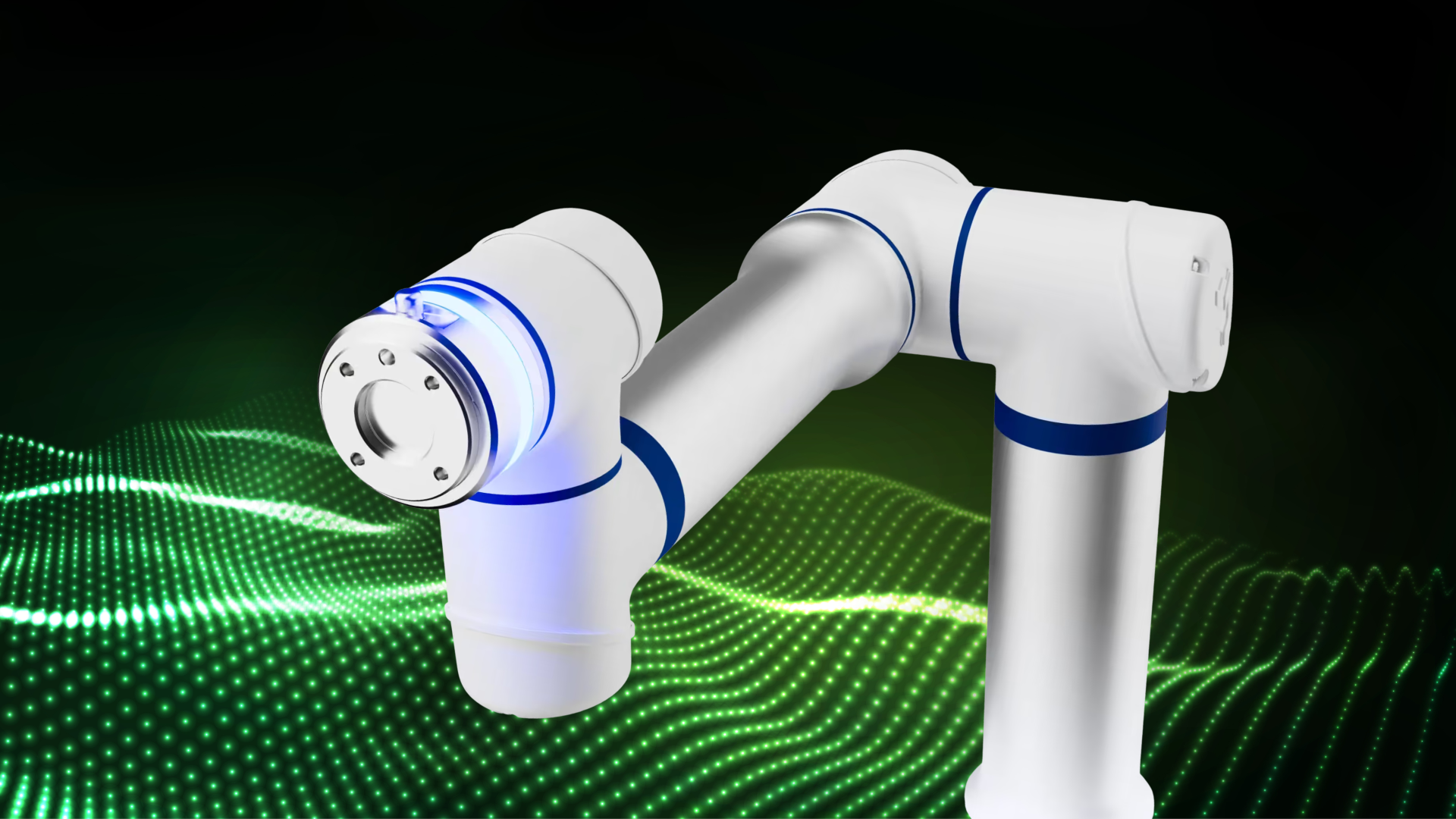
Cobots in
the Factory
Cobots in the Factory: What They Can Do, What They Cannot, and How to Tell the Difference
Over the last 15 years, collaborative robots have become one of the most discussed technologies in industrial automation. Yet, they are one of the most frequently misapplied.
Since their commercial introduction in the early 2010s, cobots have been positioned as the accessible, flexible, and safe alternative to traditional industrial robots. Although this positioning is not wrong, it is incomplete. Cobots are well suited to a clearly defined range of applications and unsuited to others. The facilities that have had the best results with collaborative robots are those that selected them because the application fit the technology, not because cobots were the modern automation trend. Understanding that distinction is the most important thing a production manager can do before investing in a collaborative robot installation.
What Defines a Cobot
A collaborative robot is defined not by its appearance but by its operating principles. Cobots are designed to detect unexpected contact and respond by slowing down or stopping, which is what allows them to operate in close proximity to human workers, without full safety enclosure under specific risk conditions. This capability is achieved through force-torque sensing, power and force limiting mechanisms, and safety-rated control systems that meet the requirements of the relevant industrial robot safety standards.
The practical parameters that follow from this design philosophy are what determine where cobots fit and where they do not. Payload capacity across current commercial cobot platforms ranges from approximately 3 kg at the lower end to 35 kg at the upper end of the most recent heavy-duty collaborative models, though the majority of deployments operate in the 5 to 20 kg range. Reach envelopes typically span 600 mm to 1,700 mm, depending on the model. Operating speeds are constrained by the power and force limiting requirements that make collaborative operation possible: a cobot moving at full speed near a human operator presents a contact risk that exceeds the thresholds defined by collaborative safety standards, which means speed is actively managed as a function of proximity. Programming complexity varies significantly across brands and generations, from teach-pendant and hand-guided programming on entry-level platforms to full offline programming environments on more advanced systems.
Where Cobots Consistently Deliver Strong Results
The applications where collaborative robots perform most reliably share a common profile:
- moderate speed
- moderate payload
- moderate to high product variability and
- a production environment where human workers and robots need to share space or interact regularly
Case packing is one of the strongest cobot application areas, as covered in detail in our earlier article on end-of-line packaging automation. The product weights involved, the need for flexible reprogramming across different pack patterns and SKUs, and the benefit of operating without full safety enclosure on a packaging line, all map directly to cobot strengths.
Pick-and-place on mixed-product lines, machine tending for CNC and injection moulding operations, light assembly including component insertion and screwdriving, quality inspection support, and dispensing applications are all areas where cobots have an established and well-documented track record.
In each case, the combination of safe human proximity, programming flexibility, and accessible integration cost makes the collaborative robot the practical choice over a fully enclosed industrial robot system.
Where Cobots Frequently Underperform
The same design principles that make cobots the go-to technology for the above applications, create real limitations in others. These limitations are frequently underestimated during the specification process.
High-payload palletizing is the most common area of mismatch. While the latest generation of heavy-duty cobots has pushed payload capacity upward (from 20kg, to 25kg, to 35kg) the speed constraints that accompany collaborative operation mean that a cobot palletizer on a high-throughput line will often be unable to keep pace with production output. The application can be automated with a cobot, but not always at the throughput rate the line requires.
High-speed pick-and-place on fast-moving lines presents a similar constraint, as the cycle time a cobot can achieve at safe collaborative speeds may be insufficient for the line rate. In such cases, an industrial robot operating within a guarded cell is the appropriate answer. Environments with significant vibration, airborne contamination, wash-down requirements, or extreme temperature ranges also present challenges for standard cobot platforms, which are not all rated for harsh industrial conditions and may require additional protection or specialist variants.
Finally, very high-precision assembly requiring repeatability below 0.02 mm is an area where the compliance built into cobot joints for safety purposes can introduce positional variation that a rigid industrial robot arm would not.
The Cobot Versus Industrial Robot Decision
The practical decision framework between collaborative and industrial robots is not about which technology is better. It is about which technology is correct for a specific application, under specific production conditions. Payload and required cycle time are the primary filters.
If the application demand exceeds what a cobot can deliver at collaborative speeds, the choice is effectively made. Product variability and changeover frequency are secondary filters. Operations handling many SKUs or frequent format changes also benefit from the reprogramming flexibility that cobots generally offer. Floor layout and the presence or absence of adequate space for guarding determine whether a fully enclosed industrial robot installation is practical. And total investment envelopes, including robot, tooling, integration, guarding, and commissioning, determine what is commercially viable for the specific project.
Where the application sits within the cobot functional reach, the collaborative robot is usually the right answer. Where it exceeds that envelope on payload, speed, or environmental robustness, an industrial robot within a properly designed safety cell will outperform it consistently and at lower total operating cost over the system lifetime.
Beyond the Cobot: A Technology That Keeps Evolving
It is worth noting that today, collaborative robots have become far more than standalone automation tools. The same core technology that makes cobots safe, flexible, and programmable in human-shared environments has become the foundation for a new generation of industrial automation solutions, which extend well beyond the fixed-arm cell.
Purpose-specific industrial humanoids, including Axl Imperial's own MarkOne platform, are built on collaborative robotic arm technology. The dual 6-axis arms that allow MarkOne to perform carrying, picking, placing, screwdriving, and assembly operations across a mobile platform are, at their core, collaborative robots integrated into a broader system designed for a wider operational scope. The sensing, force limiting, and safety architecture that defines cobot operation is precisely what makes a mobile industrial humanoid working on an open production floor alongside human workers a viable and safe proposition. Understanding cobots is, in this sense, the foundation for understanding where industrial automation is heading next.
The Right Robot for the Right Application
It must be clear by now, that collaborative robots are among the most useful and versatile tools in industrial automation. They are not, however, the right answer to every automation question. The manufacturing facilities that get the most from cobot installations are those that specified them for applications where the technology genuinely fits, with tooling matched to the product, integration designed for the production environment, and realistic expectations about throughput and payload.
Axl Imperial has extensive application engineering experience across collaborative robots, industrial robots, and purpose-specific humanoid platforms. If you are evaluating a robotic automation project and want an honest assessment of which technology is right for your specific application, contact us to start that conversation.
Contact Us More Articles