
Axl Imperial is an international manufacturer and supplier of automation, measurement control and testing devices for advanced industrial and laboratory use.
Utilising the design of state-of-the-art equipment and know-how in the field of automation and high-precision industrial measurement and control, Axl Imperial offers production processes and automation solutions to the most demanding needs of modern industry.
Consisting of a variety of engineers, each with great experience in specific industrial segments as automation, motion, measurement and control, the company provides integrated services, from design, development and installation of industrial equipment, to technical consulting, service and after-sales support, for all industrial needs as high precision in-line and laboratory measurements and quality control.
Axl Imperial seeks to constantly improve the quality of the services and systems provided, with the sole criterion, the principle, that quality and economy in production are the key prerequisites for a healthy industrial development and high quality products.
Seeing Is
Measuring
Seeing Is Measuring: How Machine Vision Systems Are Raising the Bar for Quality Control in Modern Manufacturing
Quality control has always been the step in the production process where the gap between intent and execution becomes visible. Everything upstream can be perfectly engineered, automated and optimized. But if the inspection step fails, there goes productivity. For years, although manufacturers have been taking quality seriously, they did not have the inspection tools to match the required speed and precision of the production processes. Machine vision has changed that and continues to do so, at a pace that is reshaping quality control standards across virtually every manufacturing sector.
The Limits of Human Inspection
The structural constraints of human-based inspection are well understood by anyone who has managed a production line. Throughput speed, shift-length fatigue, inter-operator variability, and the physical impossibility of detecting sub-millimetre defects or high-speed anomalies with the naked eye all place a ceiling on what manual quality control can achieve. Add to this the same workforce recruitment and retention pressures affecting every other production role, and the case for moving beyond human inspection as the primary quality gate becomes even more critical.
The question for most operations is not whether to adopt machine vision, but how to select and integrate the right system for their specific inspection requirements.
What Machine Vision Actually Does
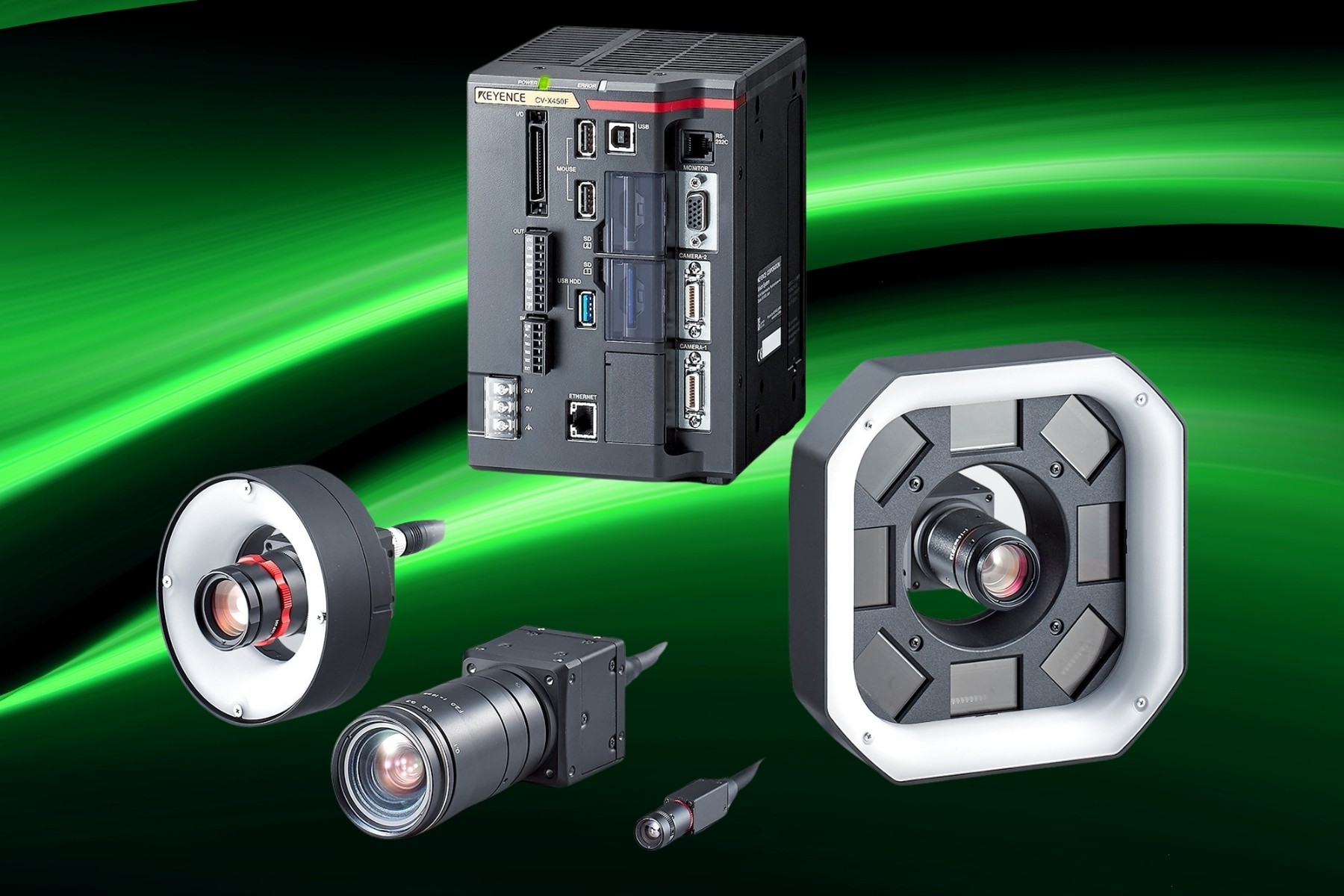
A machine vision system is considerably more than a camera pointed at a production line. The camera is the starting point. What surrounds it determines whether the system delivers reliable results in a real production environment. Conditions like the lighting architecture that ensures defects are consistently revealed rather than hidden by shadow or reflection, the optics that define resolution and field of view, the image processing software that interprets what the camera captures, and the decision logic that translates a processed image into a pass, fail, or measurement output.
The inspection functions that vision systems perform span a wide range: surface defect detection, dimensional measurement, assembly completeness verification, label and barcode reading, color and texture inspection, and fill level checking, among others. What they share, though, is the ability to execute these checks at production line speed, on every unit, without the variability that accumulates across a human inspection shift.
AI-Powered Vision: Handling What Rules Cannot Define
Traditional rule-based vision systems have served manufacturing well for decades. They still excel at defined, repeatable defect profiles on consistent products, where the criteria for pass or fail can be precisely specified in advance. Their limitations become apparent when product variability increases, defect profiles become more complex or subtle, or when the inspection task involves judgment that is difficult to reduce to a fixed set of programmed rules.
AI-powered vision systems address this directly. By training on image data rather than operating on pre-defined rules, they can handle inspection scenarios that rule-based systems struggle with, like detecting irregular or unpredictable defects, adapting to product surface variation and/or maintaining reliable performance across a wider range of conditions. The practical implication is a significant expansion of the inspection scenarios where automated vision can replace or augment human judgment.
Such product line, that illustrates how far this capability has become accessible to standard production environments, is the Keyence VS Series. It combines AI-based and rule-based inspection tools within a single platform, includes the industry's first optical zoom function for single-click image optimization across different inspection scenarios, and can be configured by production operators without specialist vision programming expertise. The result is a high-capability inline inspection system that can be deployed and adapted quickly, without the development overhead that complex vision applications have traditionally required.
Machine Vision as the Sensory Layer of Robotic Automation
The role of machine vision in modern manufacturing extends well beyond standalone quality inspection. As production environments get more automated, vision systems can enable robotic applications to become more reliable in variable or unstructured conditions.
For example, bin picking from randomly oriented parts requires a vision system that can locate, identify, and determine the orientation of each part in real time before the robot commits to a pick. Robotic palletizing cells use vision to verify product position and orientation on the infeed conveyor, compensating for the positional variation that upstream processes introduce. Case packing systems rely on vision to confirm that each product is correctly presented before the pick cycle begins. In collaborative robot applications where the robot shares a workspace with human operators, vision systems provide the spatial awareness that allows the robot to respond to a changing environment rather than operating on fixed positional assumptions.
Today, machine vision is much more than a quality tool. It has become the perceptual context that connects automated systems to the physical variability of the real production environment. A robotic cell without vision is a system that depends on perfect upstream consistency. A robotic cell with vision is a system that can operate reliably, with or without it.
Where Machine Vision Can Have the Biggest Impact
The breadth of machine vision deployment across manufacturing sectors reflects both the maturity of the technology and the universality of the quality control problem it addresses.
In food and beverage production, vision systems check fill levels, verify label placement and print quality, detect foreign bodies, and confirm packaging integrity at line speeds where human inspection is simply not a practical alternative. In pharmaceuticals, where regulatory requirements for traceability and defect detection are among the most stringent in manufacturing, vision systems handle blister pack integrity verification, serialization code reading, cap and seal inspection, and tablet or capsule defect detection as standard process steps.
Additionally, electronics manufacturing relies heavily on vision for component placement verification, solder joint inspection, and PCB defect detection at resolutions that define the limits of what optical systems can resolve. In metal processing and precision engineering, vision systems inspect surface finish, verify dimensional conformity on machined parts, and check weld quality in applications where the cost of a defective part reaching the next stage of production or the end customer is significant.
Across all these sectors, vision systems deliver inspection capability that is faster, more consistent, and more sensitive than what human operators can sustain under real production conditions.
What to Consider When Selecting and Integrating a Machine Vision System
For operations evaluating machine vision investment, the selection decision involves more variables than camera resolution and processing speed. Inspection throughput requirements relative to line speed define the baseline performance specification. Product variability determines whether a rule-based system is sufficient or whether AI-assisted inspection is needed. Environmental factors, including ambient lighting conditions, vibration, dust, and temperature, affect both system design and long-term reliability. Integration with existing line control, PLC systems, and automated rejection equipment determines how cleanly the vision system fits into the production flow without requiring manual intervention when a defect is detected.
Equally important is the expertise of the supplier. A machine vision system that has been correctly specified, properly calibrated, and supported by a team with application experience in the relevant industry will outperform a technically superior system that has been poorly integrated or inadequately configured. The technology is only as effective as the implementation behind it.
When Seeing and Measuring Become the Same Thing in a Factory
The convergence of high-speed imaging, advanced optics, AI-based processing, and accessible configuration tools has brought machine vision to a point where it is no longer a specialized capability reserved for high-volume or highly regulated industries. It is a practical and commercially justified quality control investment for a broad range of manufacturing operations.
Seeing and measuring have become effectively the same operation on the modern production floor. The question is no longer whether machine vision can improve quality control in your facility. It is which system is right for your specific application, and what a well-integrated implementation looks like in practice.
Axl Imperial supplies and integrates machine vision systems for industrial quality control and robotic automation applications, including high-performance Keyence vision solutions. Contact us to discuss your inspection requirements or to arrange a demonstration of a working vision system in an application relevant to your production environment.
Contact Us More Articles